
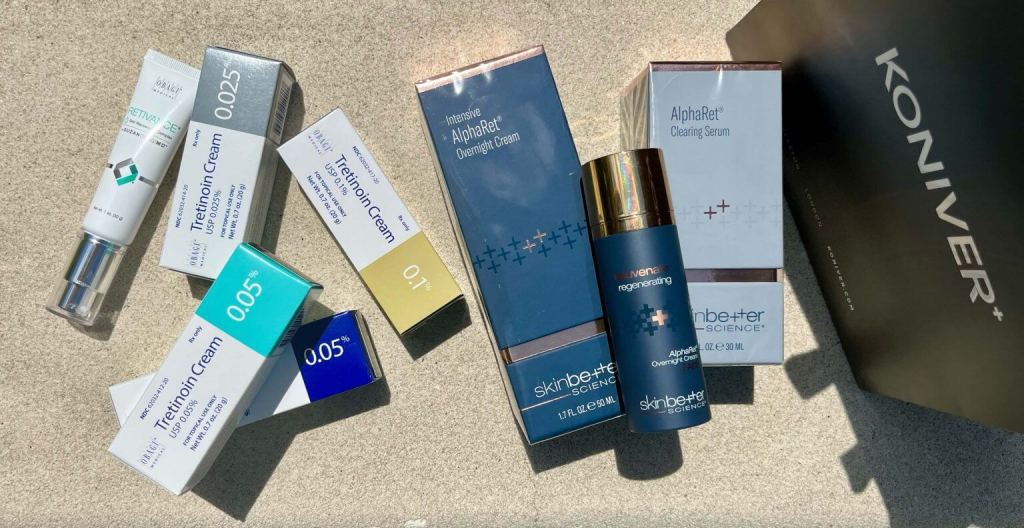
Apart from sunscreen, no skincare ingredient has more evidence behind it for aging skin than retinoids. They smooth texture, help clear acne, boost collagen and soften fine lines.
They also have a reputation for being irritating and confusing. This guide covers what they are, which type to start with, and how to use one without giving up in the first month.
What Are Retinoids?
Retinoids are a family of ingredients derived from vitamin A. They work by speeding up cell turnover, which naturally slows as we age.
At our clinic, we describe them as exercise for the skin. You exercise your body to keep it strong, and retinoids do the same for your skin. They work on all three of its key cell types: keratinocytes, melanocytes and fibroblasts.
The result, over time, is smoother texture, more even tone, fewer breakouts and more collagen.
The Main Types, From Gentlest to Strongest
The key difference between retinoids is how much work your skin has to do before it can use them. Your skin can only use retinoic acid, so every other form has to be converted into it first. Each conversion step makes the product gentler, but also slower.
| Type | How it is sold | Conversions needed | What to expect |
| Retinol | Over the counter | Two | Gentlest, but slowest to show results |
| Retinaldehyde | Over the counter | One | A strong middle ground: effective and still gentle |
| Tretinoin (retinoic acid) | Prescription | None | Most powerful, most likely to irritate at first |
One exception is worth knowing: adapalene, sold over the counter for acne, is a retinoid that works directly without needing conversion.
Do I Really Need One?
If you want to slow visible aging, yes. We recommend a retinoid for almost everyone over 25.
Retinoids take time, though. Most people see a real difference in texture and tone after two to three months of consistent use, with continued improvement after that. To keep the results, you have to keep using them.
Which One Should You Start With?
Many people want to jump straight to the strongest prescription formula. We don’t recommend it. The best retinoid for your skin is the one you can tolerate well enough to use consistently.
Our preferred starting point for most new users is retinaldehyde. It only has to convert once, so it is noticeably more effective than retinol, while still being gentle enough for most skin. Retinol remains a sensible choice if you are under 25 or have very dry, sensitive skin.
Once your skin has adjusted, the next step is prescription tretinoin. We usually start at the lowest strength, 0.025%. It suits most skin types, including dry, mature and sensitive skin, with a little patience at the start. Working through a bottle of the mild strength first means far less irritation, and a much lower chance of giving up.
Prescription tretinoin requires a consultation with one of our providers, who will recommend a strength based on your skin.
How to Start Without Irritation
Some redness, flaking and dryness in the first few weeks is normal. It is a sign the retinoid is working, and it settles as your skin adjusts. These habits make the adjustment easier:
- Use it at night, on clean, dry skin.
- Use a pea-sized amount for the whole face. More is not better.
- Start every other night, then build up. We used to suggest every third night, but found people forgot, and consistency matters more than anything.
- Layer it with a moisturizer, before or after, to cushion irritation.
- Avoid strong exfoliating acids on the same night while your skin is adjusting.
The worst thing you can do is stop and start. Every break of a few weeks means your skin has to adjust all over again. That cycle of irritation is what makes most people give up.
Can I Use My Retinoid in Summer?
We get this question every spring. Yes, you can, and you should keep going.
Retinoids can make skin more prone to irritation and burning, especially in the early weeks. That is a reason to be diligent with sunscreen, not to stop. Apply your retinoid at night, wear a broad-spectrum sunscreen every morning, and reapply it often.
Stopping for the summer means restarting the irritation cycle in the fall. Our guide to summer skincare in Charleston covers the rest of your warm-weather routine.
Who Should Not Use Retinoids
Do not use retinoids if you are pregnant, trying to conceive or breastfeeding. Check with your provider before starting one if you have eczema, rosacea or very reactive skin, or if you are using other prescription skin treatments.
What Retinoids Work Well With
Retinoids pair well with vitamin C in the morning, and with hydroquinone when dark spots are the main concern. They also help prepare skin for in-office treatments such as chemical peels, though your provider may ask you to pause them for a few days beforehand.
For how retinoids fit alongside sunscreen, vitamin C, growth factors and peptides, see our top five anti-aging ingredients.
Book a Consultation
Well Labs+ Medspa Charleston, 1470 Tobias Gadson Blvd, Suite 100A, West Ashley. Call (843) 405-5906 or book online.
