
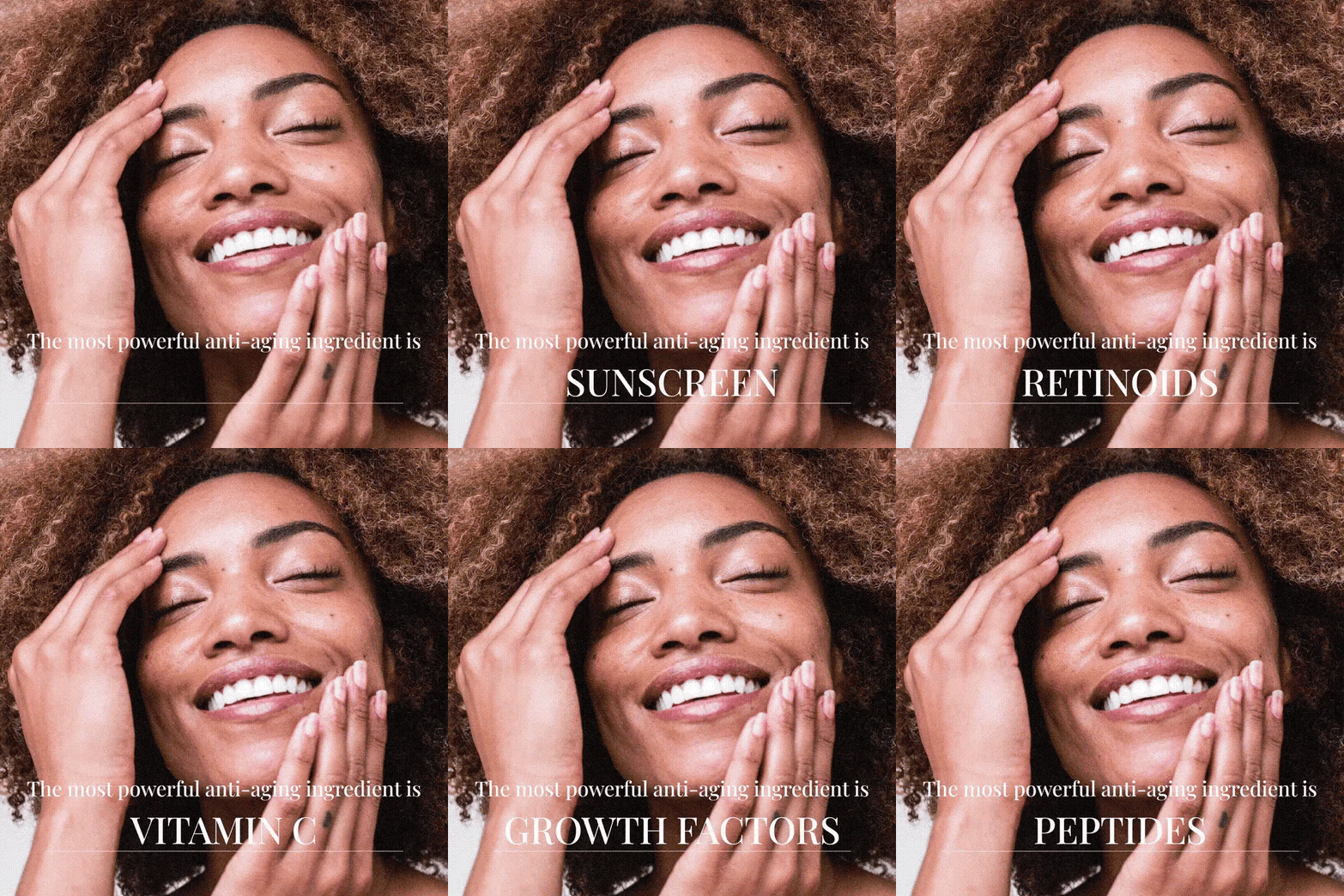
There is no single ingredient that fixes every sign of aging. But a handful of proven ones, used together, cover almost everything, from uneven texture to loss of firmness.
Keli Koniver, PhD, founder of Well Labs+ Medspa Charleston, recommends these five above all others. Here is why, in the order she ranks them.
1. Sunscreen
Sunscreen comes first, and not by a small margin. Nothing else on this list can keep up with skin that is being freshly damaged every day.
Look for broad-spectrum protection, which covers both types of ultraviolet light:
- UVB rays burn the skin and can cause skin cancer.
- UVA rays break down collagen and speed up aging, often without you noticing.
Sunscreens come in two broad types. Mineral, or physical, sunscreens sit on top of the skin and block the rays. Chemical sunscreens are absorbed into the skin and absorb UV before it can do damage. Some products combine both.
Mineral formulas used to mean a thick, white paste. That is no longer true, and today’s versions are light enough to wear every day. They are also a simple choice if you prefer to avoid certain chemical filters.
Whichever you choose, the rule is the same: wear it daily and reapply often. In a Charleston summer, that matters even more. Our guide to repairing sun damage explains why.
2. Retinoids
Retinoids are vitamin A derivatives, and they are among the most proven anti-aging ingredients there are. Keli describes them simply:
“We think of retinoids as exercise for the skin.”
They work on all three of the skin’s key cell types (keratinocytes, melanocytes and fibroblasts) by speeding up cell turnover. The result is smoother texture, more even tone and more collagen. We recommend anyone over 25 use one.
Expect some dryness, peeling or redness at first. That is a sign the retinoid is working, and it settles as your skin adjusts. The key is consistency.
There is a real difference between drugstore retinol, retinaldehyde and prescription tretinoin, and choosing the right one matters. Our full guide to retinoids covers which to start with and how to avoid irritation.
3. Vitamin C
Of all the antioxidants, vitamin C is Keli’s favorite, specifically L-ascorbic acid, the most potent form.
It protects against the damage you cannot see: free radicals, pollution and environmental toxins. It also helps your sunscreen work harder, and it calms inflammation. With regular use, skin looks brighter, texture improves and fine lines soften.
The catch is that pure L-ascorbic acid is unstable. Once opened, a bottle lasts roughly four months before it oxidizes and stops working. Keli’s advice:
“This is not a product you want to skimp on. Use it lavishly.”
Products made with vitamin C derivatives last longer on the shelf, but they are less potent. It is a trade-off between strength and shelf life, and either can work if you use it consistently.
4. Growth Factors
Growth factors are messenger molecules. They tell fibroblasts, the skin’s collagen-making cells, to replicate and repair.
Fibroblasts start slowing down in our thirties, which is when fine lines begin to appear. Growth factors help switch them back on.
They come in two main types, human-derived and plant-derived. Keli prefers human-derived for most people, and puts it plainly:
“We are humans, not plants.”
Our guide to growth factors explains the difference and how to choose between them.
5. Peptides
In our thirties, the concern is usually fine lines. In our forties and fifties, it shifts to sagging and loss of firmness.
Peptides are short chains of amino acids that signal the skin to support firmness and elasticity. That makes them especially useful from your forties onward.
The good news is you do not have to choose between growth factors and peptides. Several serums combine the two in one bottle, which saves both time and money.
When sagging has gone beyond what any serum can reach, energy treatments are the next step. We compare the options in Ultherapy vs Sofwave vs a facelift.
Putting It Together
A simple routine that uses all five:
- Morning: cleanser, vitamin C, a growth factor and peptide serum, then broad-spectrum sunscreen.
- Evening: cleanser, a retinoid, then your growth factor and peptide serum or a moisturizer.
Not sure which products suit your skin? Ask at your next visit. Every consultation at our West Ashley clinic starts with a Visia skin analysis, and our providers will build a routine around what your skin actually needs.
Book a Consultation
Well Labs+ Medspa Charleston, 1470 Tobias Gadson Blvd, Suite 100A, West Ashley. Call (843) 405-5906 or book online.
